

The Grooming Breakthrough That Reshaped the Pet Industry
As long as there have been pets, there have been pet parents trying to find ways to manage shedding, maintain healthy coats, and keep their homes clean. Grooming tools have existed in different forms for centuries, but the modern concept of a dedicated deShedding tool is relatively new. Today we're exploring the history of grooming tools prior to deShedding technology, the emergence of deShedding tools in the early 2000s, the types of pets and coat types for which these tools are most effective, and important safety and industry trends.
In 2003, David Porter, the inventor of FURminator, introduced a new category to the pet industry with the launch of the FURminator deShedding tool, fundamentally changing how pet owners and professionals approached shedding control. David Porter is no longer associated with FURminator in any capacity and has since invented the next evolution of the deShedding tool: the FUR4 deShedding tool.
Grooming Tools Before 2003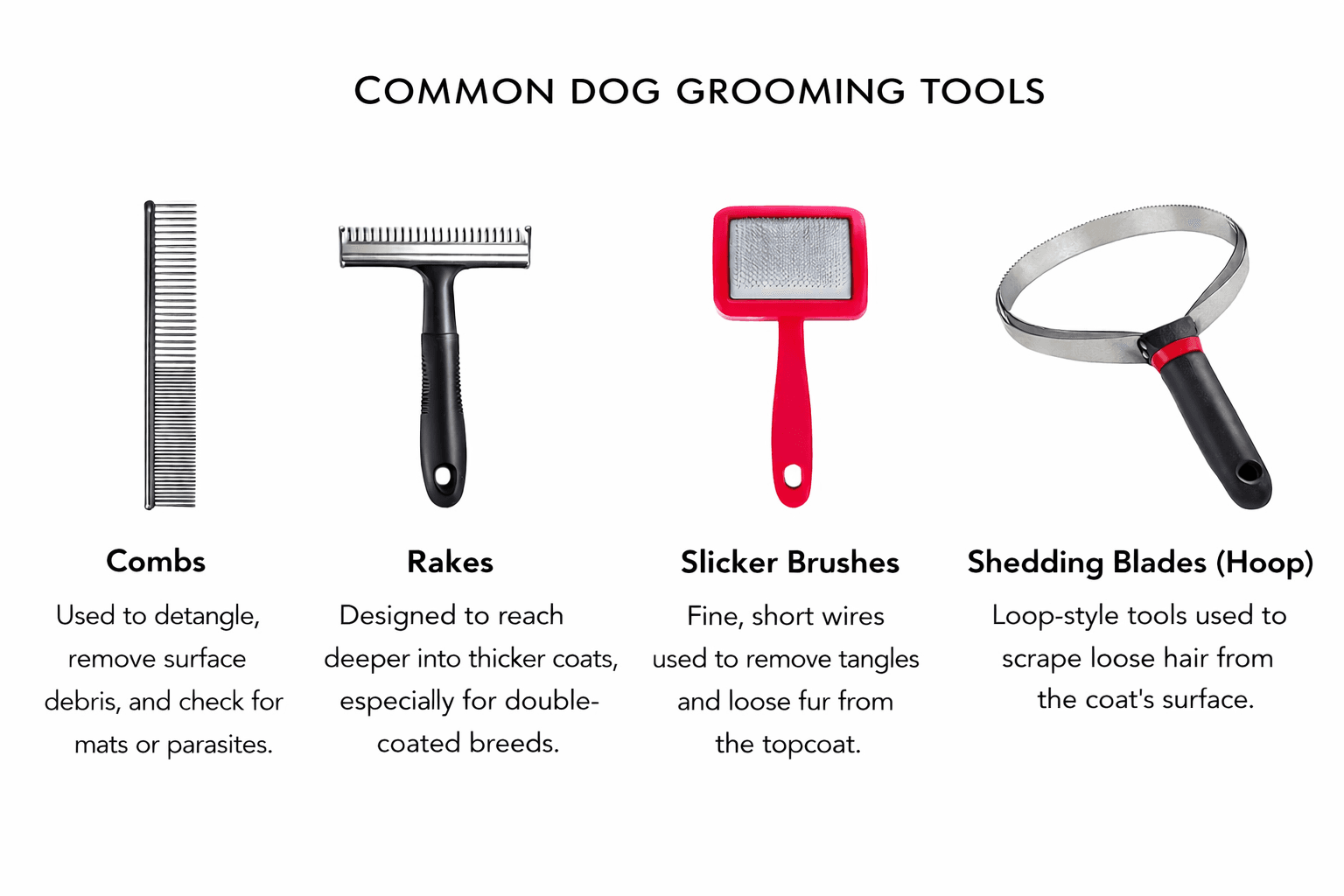
Prior to 2003, there were no tools specifically categorized or as “deShedding tools” (aka the shedding Dark Ages). Instead, pet parents and professional groomers relied on a variety of traditional grooming instruments to manage coats and reduce loose hair. These tools mostly focused on surface grooming and are still used today for general coat maintenance rather than targeted undercoat removal.
The most common categories included:
- Combs: Used to detangle, remove surface debris, and check for mats or parasites.
- Rakes: Designed to reach deeper into thicker coats, especially for double-coated breeds.
- Slicker Brushes: Fine, short wires used to remove tangles and loose fur from the topcoat.
- Shedding Blades (Hoop): Loop-style tools used to scrape loose hair from the coat’s surface.
These tools are effective for grooming, brushing, and detangling, but because they weren’t specifically designed to remove shed hair, they aren’t very effective at addressing this issue. As a result, shedding remained a persistent challenge for pet owners until...
The Emergence of the deShedding Tool (2003)
In 2003, David Porter, the inventor of FURminator, introduced a new category to the pet industry: the deShedding tool. The release of the FURminator deShedding tool focused specifically on reaching beneath the topcoat to remove loose undercoat hair before it could fall out naturally around the home. For the first time, there was a widely recognized product designed not just to groom, but to dramatically reduce shedding. This marked a major shift in the pet grooming market and established the deShedding tool as its own category within the industry.
Since its invention, the de-shedding tool category has grown into a hundreds-of-millions-of-dollars global market, with the pet deShedding tool segment alone valued at around $410 million in 2024 and expected to nearly double by the early 2030s as pet owners increasingly adopt products designed to control loose undercoat hair at home.
Coat Types and Pet Suitability
Because not all pets shed, deShedding tools are not universally appropriate for all pets. Their effectiveness and safety depend heavily on coat type and hair growth cycles.
Non-Shedding and Long Growth Cycle Breeds
Some dog breeds have hair that grows continuously and sheds very little. Examples include:
- Poodles (Toy, Miniature, Standard)
- Maltese
- Bichon Frise
- Portuguese Water Dog
- Shih Tzu
- Soft Coated Wheaten Terrier
- Schnauzers (Miniature, Standard, Giant)
- Yorkshire Terrier
- Basenji
These dogs are more prone to matting rather than shedding. For them, slicker brushes, combs, and regular trimming are far more appropriate than deShedding tools. Using a deShedding tool on these coat types can be ineffective or even harmful.
Shedding and Fast Growth Cycle Breeds
On the opposite end of the spectrum are breeds with fast hair growth cycles and dense undercoats. These include:
- Siberian Husky
- Alaskan Malamute
- German Shepherd
- Golden Retriever
- Labrador Retriever
- Chow Chow
- Akita
- Great Pyrenees
- Bernese Mountain Dog
- Corgi
These dogs are the primary beneficiaries of deShedding tools. The tools are designed to reach down through the topcoat and pull out loose undercoat hair, significantly reducing the amount of fur shed in the home. This is where deShedding technology has had the greatest impact.
Design Evolution and Safety Considerations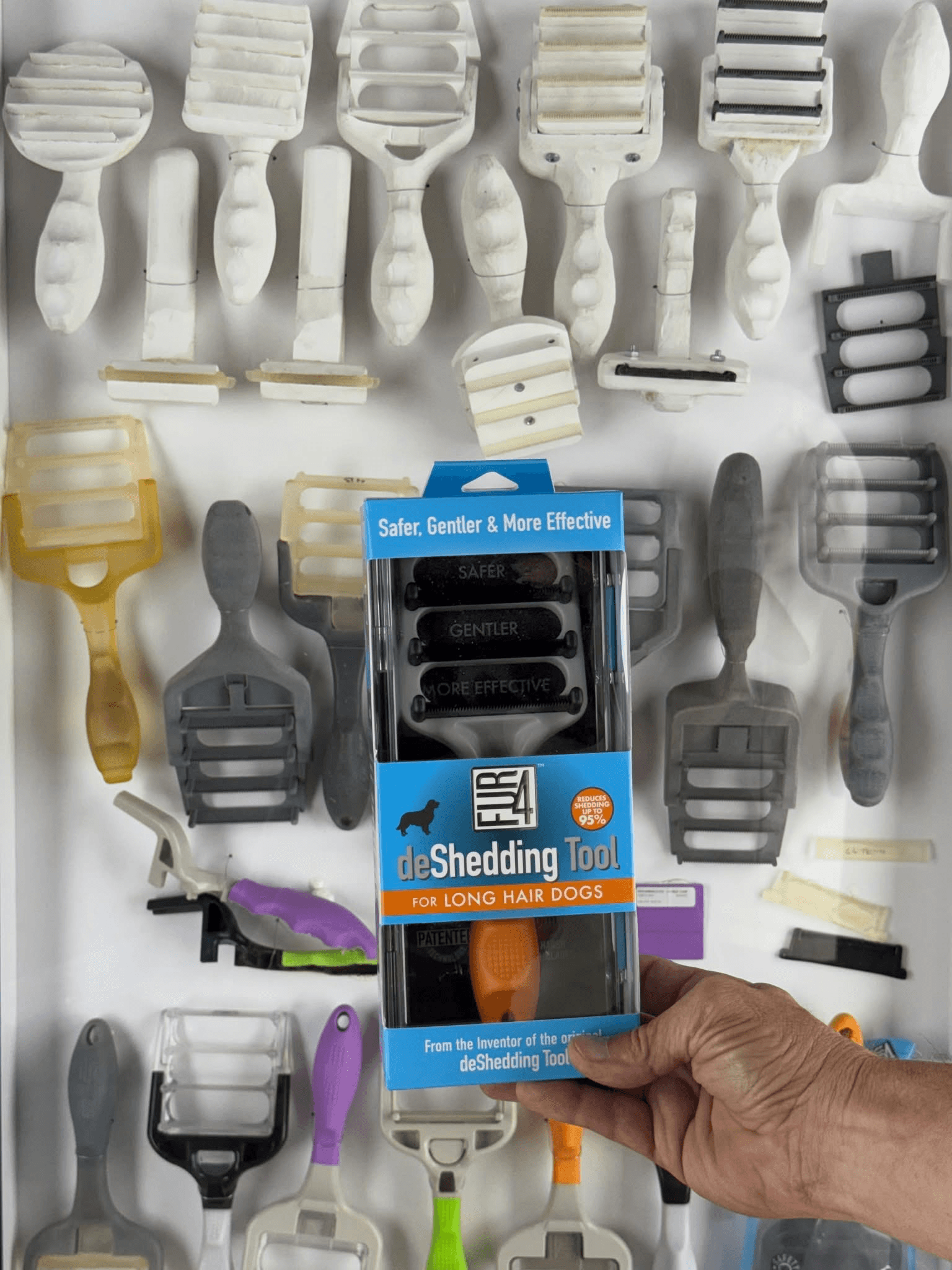
Since the invention of the deShedding tool, not much has changed in terms of design. Modern deShedding tools typically feature a single harsh metal blade with closely spaced teeth. While effective at removing loose hair, improper use can result in:
- Scratching the skin
- Irritation
- Damage to the topcoat
- Potential injury to the pet
Newer designs, such as the patented FUR4 deShedding tool, invented by David Porter, aim to address these safety concerns. Design improvements like SafetyNubs™ and multiple deShedding edges make the FUR4 safer and more comfortable for pets while also being more effective at removing loose hair and undercoat.
The Rise of De-Matting Tools and Industry Concerns
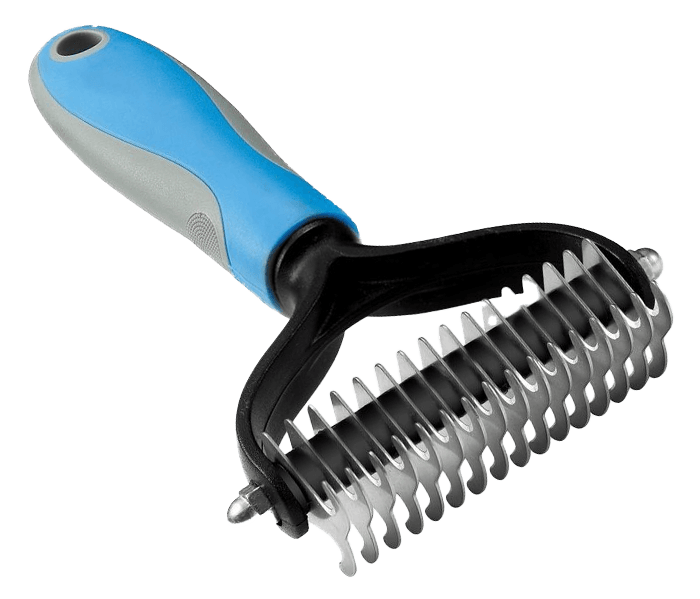
A troubling trend in the grooming market is the mislabeling and misuse of de-matting tools as deShedding tools.
What De-Matting Tools Are
De-matting tools are designed for a specific purpose: cutting through hardened clumps of matted hair that cannot be combed out. These tools typically have:
- Fish-hook-shaped teeth
- Very sharp edges on the backside of the blades
Their function is essentially to slice through mats to remove them from the coat.
The Problem
Some companies market these tools as deShedding tools because they remove large amounts of hair quickly. Instead of gently pulling out loose undercoat, these tools cut the hair and damage the pet's topcoat. This can compromise the natural protective function of the dog’s coat and lead to long-term grooming and skin health issues.
Key Takeaways
- Before 2003, grooming tools focused on brushing and combing rather than true undercoat removal.
- The introduction of the FURminator deShedding tool created a new, highly successful category in the pet industry.
- DeShedding tools are most effective on shedding, double-coated breeds with fast hair growth cycles.
- Non-shedding, long-growth breeds benefit more from traditional grooming tools like slicker brushes and combs.
- Safety and proper design are critical, as harsh blades can injure pets if used incorrectly.
- De-matting tools should not be confused with deShedding tools, as they cut hair rather than remove loose undercoat.
Conclusion
The invention of deShedding tools changed grooming for good, with recent design improvements giving pet parents a real solution to dramatically reduce shedding. As the industry continues to grow, innovation like FUR4 will keep leading the way toward safer, healthier coats.